Wednesday, 9 December 2015

watch guide collecting

Watch Collecting - a beginner's guide to watch collecting

Paul Fraser Collectibles' crash course on the essentials of watch collecting
Watch collecting can be one of the most complex of all pastimes.
Horologists study for years to learn the workings of these miniature marvels, but our guide will give you the essential info you need to know in just a few minutes.

Sport watches - These watches cater for the individual on the go, with special functions to meet their intended purpose. Pilot watches perform vital flight plan tasks, while diver's watches are waterproof to impressive depths and time the oxygen you have left to breathe.
Chronographs - Like sport watches, the chronograph is designed for functionality, incorporating a stopwatch function. Often there is more than one dial, recording second, minutes and hours.
Quartz watches - Quartz watches achieve the greatest accuracy, using tiny crystals that vibrate at a specific frequency. Almost all other forms of watches will lose their accuracy over time, and many cannot easily be fixed.
Mechanical watches - Mechanical watches are best loved by collectors - prized for their design, beauty and engineering. Most luxury watches, or haute horlogerie, are mechanical and the best examples feature a number of "complications": the name given to any feature of a watch that is not telling the time.
Digital watches -A modern advancement usually frowned upon by collectors, the digital watch relies on electronic drives. The first digital watch was the Pulsar from the Hamilton Watch Company, which was made in 1970 after the company designed a prototype for Stanley Kubrick's 2001: A Space Odyssey.

The "movement" of a watch, also known as its calibre, is its internal mechanism, and this fascinates some collectors. Some collect purely based on the movement contained within the watch, and a collection can comprise several different watches, all with the same mechanism inside.
There are two main types of watch movement: manual and automatic. Manual requires the user to turn the crown in order to wind the mainspring for energy, while the motions of the wearer's wrist wind an automatic while it is worn. That said, there are thousands of mind-boggling variations - get researching!
Complications
For many collectors, complications - or simply, the features of a watch - make the hobby worthwhile. Watches can have hundreds of different functions, including:
Moon phases - a display with the current phase of the Moon
Sidereal time - a time scale based on the Earth's rotation relative to the stars
Time zones - found on world traveller watches
Solar time - the time based on the Sun's position in the sky
Equation of time - shows the difference between standard time and solar time
Leap year cycle
Zodiac signs
Perpetual calendar - a calendar that spans many years, providing the day of the week for future dates
Star charts
The tourbillon
Watch Collecting - a beginner's guide
A complete tourbillon before it is placed inside the watch case
No collector can call himself a true enthusiast without knowing the function of a tourbillon.
In short, the effects of gravity are particularly felt by the tiny mechanical parts inside a watch, and this can affect accuracy. To counter this problem, the master watchmaker Abraham-Louis Breguet developed the tourbillon in 1795, creating a rotating cage in which the escapement and balance wheel are set.
However, a tourbillon is mainly included in modern watches as a display of the watchmaker's skill, and debate remains as to whether they ever improved accuracy.
The lingo
As with holey cheese and chocolate, the Swiss are world renowned for their watch making. As such, many horologists use original French terms when talking about their collections. Here's a few French phrases to ensure you can talk the talk:
Ebauche -the term given to an incomplete movement blank, or the individual parts of a movement that has yet to be assembled. This term frequently appears when buying spares. The timing system, mainspring and escapement are not part of an ebauche.
Etablisseur - a watch factory that produces watches by assembling pre-fabricated parts
Chabot - the collective term for a watch movement, encompassing all its individual parts
Terminus - a watchmaker who assembles watches for an etablisseur, also known as an "atelier de terminage"
The most valuable watch ever sold at auction
Patek Philippe is known for producing some of the finest, and most valuable, watches in the world. It makes sense then that the most valuable watch ever sold at auction was a one-off piece created for one of the world's wealthiest watch collectors.
The Henry Graves Super complication is a one-of-a-kind gold pocket watch created for the American banker Henry Graves Jr. At the time it was built in 1933, it boasted the most complications of any watch. It sold for $11m at a Sotheby's auction in 1999.
Today, it is housed in the Patek Philippe Museum in Geneva, a mecca for dedicated watch collectors.
Investing
Rolex Cosmograph DaytonaThe Rolex Daytona, one of the most collectible watches, celebrated its 50th anniversary in 2013
Many beginner collectors are drawn to the hobby by the allure of investing. Here are a few buying tips that will improve your chances of making a profit:
Buy quality - Buy the best you can afford, as only the top pieces demonstrate investment potential. Also, with a superior quality watch, you won't be disappointed even if you lose a few dollars. Stick to the best known brands, such as Patek Philippe, Rolex and Breguet, as their reputation is unlikely to fade in the minds of fellow collectors.
Buy rarity - Rarity drives the market: a watch collector will pay more for a watch that they haven't seen before, or have been unable to find.
Buy provenance - A watch can be worth thousands, but if its ownership history is uncertain, collectors are likely to steer clear. Buy boxed watches that have full documentation, and if you can find a watch worn by a famous name, you could be on to a winner.
Buy iconic - Certain watch lines will never go out of fashion, and are likely to hold their value long into the future. Think James Bond watches, Rolex Daytona, Cartier's Tank, Omega's Seamaster or the Tag-Heuer Monaco.
Resources
Below are a few useful websites to get you started, but when it comes to watch collecting, you really can't discount the value of a book. There are thousands of books on specialised subjects available, which can even form the basis of a collection on their own.


Monday, 7 December 2015

beginners collectable watches

   A Beginners guide of vintage and  collectable watches


Buying your first ‘real’ timepiece can be a daunting experience. For most people, it means you’ve had to save up for some time before taking the leap, or it’s a something to commemorate an occasion in your life that you want to remember for a long time.
Many variables factor into purchasing first ‘real’ watch, the most important of which we’ll discuss today. This guide isn’t going to tell you which watch to buy. That defeats the purpose of the article. Instead you’ll be provided with a framework to help make your choice more considered, and in the long run, make you happier with your purchase.
If you’re considering starting a collection, then there are also other factors to take into account, which we’ll touch on towards the end of this piece.

Finances:

The most obvious factor is money; how much are you willing to spend on your first timepiece? Your price range is unfortunately the biggest determinant of what you’re able to get your hands on (if you’re buying something brand new), and therefore you should be sure of what your limit is.
Having a maximum spend in mind is a good way to go about it, as you might stumble across something you really like for less than you expected. If you go into a store saying you want to spend $10,000 on a watch, the dealer is going to try to sell you a watch starting at $10,000, assuming that you’re willing to spend more for upgrades that probably won’t be worth it at the end of the day.

New or Pre-Owned, Modern or Vintage:

Do you want something that you’ll get to take out of its wrapping for the first time, or are you after something with a bit of history behind it? Vintage or pre-owned watches are a great option if the equivalent brand-new watch is out of your price range. If you go with a reputable second-hand dealer and you’re sure the watch has been taken care of properly, then you’ll save quite a bit of money on some models, and get a great watch to show for it. It takes a little more time and research, but you’ll be very pleased with the results of your hard work. You also don’t need to worry as much about getting tiny scratches or marks on it, as it’s a vintage piece.

On the other hand, if you’re going to buy a new watch from an authorised dealer, then you get the whole experience of going to the showroom, trying on multiple new watches, having the dealer take excellent care of you, and maybe even some extra brand-related goodies if you’re very lucky. Best of all, you get a watch that’s fresh out of the box, untouched by anyone else, and in 100% mint condition.


Complications and Features:

Complications can add both to the visual appeal and complexity of a watch, but also add to their price. Make sure you get a watch whose complications you will appreciate and/or use. For instance, Rolex’s Yacht-Master II is a watch that has been created for a very specific market, and won’t be useful for the majority of watch-wearers (or most owners of a YM-II for that matter).
Other features (not necessarily complications) can also determine the right first watch for you. Therefore you need to ask yourself what you’re planning to do with your watch. Are you going to wear it every day to work? In that case, what type of work are you involved with? If you’re an engineer or scientist and work around a lot of magnetic fields, then go for watches with magnetic field protection (IWC Ingenieur, Rolex Milgauss). If you work in an environment where your watch is likely to get wet, or you’ll need to clean it often, then your watch will need to be very water resistant. However if you’re only really planning on wearing this watch to special occasions, then your options are wide open and the entire watch market is open to you, although you may prefer to go for a dressier model.

Material:

The material that your chosen watch is made of is almost always driven by your price range, as watches that come in any of the precious metals cost a lot more than their steel counterparts, especially if you get them on a matching bracelet. That being said, if you definitely know you want a particular material, be it steel, or gold, or even carbon, do your research. Gold looks terrific on some watches, but it is a much softer metal than steel, and may dent or scratch more easily if you accidentally knock it on the corner of your kitchen bench (which you will, guaranteed). Carbon is a very lightweight, durable material. So much so, that you may not be used to its (lack of) weight and find yourself wanting a heavier watch.

Strap:

The particular model you choose might limit your choice of strap, but it should still be a consideration in your decision. Traditionally, dress watches are worn on leather straps under a shirt cuff and suit. However, ‘sport’ watches with full metal bracelets are becoming more and more accepted formal wear, with many professionals opting for ‘desk divers’ with a suit and tie.

Collecting:

Beginning a collection with a brand-new watch might seem like a good idea at the time, and it may well be, but the watch you buy might not end up being ‘collectible’ over time. If this is the path you choose, then do your research on what makes watches more desirable after a long period of time and spend your money wisely. On the flip side, there are thousands upon thousands of vintage watches that have a great pedigree and are up for grabs on the grey market. Once again, this will require a little research on what makes a good buy, but it’s often the hunt that makes the reward worthwhile.

Following the herd:

If you work in certain fields you may find yourself among colleagues and co-workers who consider themselves ‘watch guys’. While some of them may in fact be quite knowledgeable on the matter, don’t be a follower just for the sake of it. If all the execs at your company are wearing Submariners (and trust me, they’re likely to), go for something else, even if it’s only slightly different. If you’re hell-bent on a Rolex, and you’re not much of a diver, try the GMT Master II, or better yet, a Vintage GMT with a two-tone bezel. If you’re feeling more courageous, research some brands with an equally solid pedigree, and a little variation in design. Brands like IWC, Jaeger-LeCoultre, Girard-Perregaux and Zenith are doing some excellent things in watchmaking, and provide plenty of choice across many different styles. Anyone can wear a new Submariner (and don’t get me wrong, it’s a great watch), but it takes real horological knowledge to appreciate someone wearing a Reverso or a Portuguese Handwound 8-Days instead. Suddenly you’re the guy with the watch no one else has, and you’ll be glad you spent your money wisely. Well I hope you enjoyed this article I presented to you  and  it serves you well ..till next time

Wednesday, 2 December 2015

A beginners watch guide

Know Your Movements
There are two general categories of mechanical movements: manual and automatic. Manual watches require you to turn the crown to "wind up" the watch, usually once a day. Automatic watches use a rotor, or weight, which gains momentum from the movement of your wrist and winds the watch on its own. If you wear an automatic watch daily, it should store enough power to stay running.
 
Complicate Matters
Complications are supplementary functions, such as a perpetual calendar (which tracks the day, month, and year—including leap years—accurately for decades) or a chronograph (a stopwatch, often with sub-dials, particularly favored among watch collectors).
 
About Face
The condition of the dial (not the movement) generally determines the price tag. A repainted or refinished dial can kill the value of a watch, as the printing can be uneven or crooked and is usually of lesser quality than that of original dials. These poseurs are hard to spot. (Look for tips from watch enthusiasts in online forums.)
 
Be (and Buy) an Original
Look for watches with original hands, bezels, and movement (in good working condition), with unpolished cases (or just lightly buffed). Some collectors will pay a premium for a "full set"—watches with their original boxes, receipts, and manuals.
 
Gold Standards
At auction, unique stainless-steel pieces can trump gold, price-wise, though in recent years platinum and white and rose gold have been rising in popularity and value. That said, a watch is more than an investment. Get a feel for what metal looks good on your skin. A rose-gold watch may confer flair, flamboyance; steel, a measure of iciness—perfect for a boardroom showdown.
 
Yes, Size Matters
Vintage watches are generally smaller than their modern-day counterparts. But the outliers—larger models from prestigious brands (like the Patek Philippe Calatrava Ref. 570, at 35 millimeters in diameter)—can bring huge premiums.
 
Go Beyond the Top Two
If you're aiming for the bling of a nineties hedge-fund manager, you'll want to go with Rolex or Patek Philippe, generally the priciest brands in vintage. (A classic Rolex Submariner can run you as much as $500,000.) But don't forget other, under-the-radar options (dive watches, say, from companies like Jaeger-LeCoultre and Longines), which look great and often go for a lot less.
 
Buy the . . . What?
The collectors' adage "Buy the seller" is especially true with watches. A respected dealer can help you navigate the vintage landscape and weigh the various factors that go into your decision. It may require some trial and error—and confidence. Don't buy what you think will impress others; buy what looks good, and feels right, on your wrist. Smartwatches may talk, but a vintage timepiece should speak to you.
 
 
What is a mechanical watch movement?
A watch's motor is called a movement, and in a quartz watch, a battery and a quartz crystal do much of the work, supplying energy to the gears. Mechanical watches have no battery—just dozens, sometimes hundreds, of tiny components. By winding a mechanical watch, you tighten the coiled mainspring, which provides the necessary torque to set the other components in motion. As it unwinds, energy is transmitted through the gear train (with gears that measure shorter periods of time rotating faster than those measuring hours). All this power flow is doled out by the escapement. The ticktock sound you hear is the escapement at work, regulating power and thus regulating time.
It's all pure physics
With mechanical watches (those without batteries), you have two basic options: manual or automatic. A manual watch requires turning the crown on the watch's case to wind the mainspring inside, usually once every 24 hours. For centuries, winding was your only option. Then came Abraham-Louis Perrelet in 1777. His automatic pocket watches required no winding. Today's wrist versions work pretty much the same way: They use a rotor—basically, a weight that rotates around a central pivot, gaining momentum from the movement of your wrist and winding the watch on its own. If you wear an automatic watch daily, it should store enough power to keep working. If it's been tucked in a drawer for a few days, just wind it manually to get it up and running again.
 
thanks for listening an d reading  I hope you enjoyed this article as  much as I like  placing it up and  making  more readers enlightened about  modern watches.


Saturday, 28 November 2015

beginners guide to watchmaking


                      The Beginner's Guide to Buying a Watch


Introduction
As the name suggests, this is a “Beginner’s Guide to Buying a Watch.” We designed this guide to help those readers that are new to watches, and need assistance in determining the basics of a watches, so as to make an informed decision when buying one.
Quartz vs. Mechanical
One of the first things to consider when buying a quality timepiece is if you want a “quartz” or a “mechanical” watch.
Quartz watches are generally inexpensive, easy to maintain and highly accurate (typical accuracy is 15+/- seconds per month). They run on battery power, a long-life lithium battery lasts approximately 3-years. In some cases the battery is rechargeable, in which case sunlight “solar-powered” (like a Citizen Eco-Drive) recharges it; or wrist movement “rotor-powered” (hybrid like a Seiko Kinetic) recharges it (not to be confused with a rotor that winds the mainspring on a mechanical timepiece).
Mechanical watches are generally more expensive than quartz, and although they are not as accurate, most modern timepieces are very accurate (the best watches, some of which are officially certified chronometers, are accurate to 5+/- seconds per day, or better). Power comes from a mainspring which is either wound by hand (the old fashioned way) or automatically wound (self-winding) by a rotor that oscillates as your wrist moves, which in turn winds the mainspring. Unlike quartz, the power that is reserved is typically only enough for a few days, so if left unattended, the watch will need to reset and wound (this is why there are automatic watch winders). Good automatic mechanical timepieces allow you to also manually wind the timepiece (although some cheaper models do not, so be aware of this). Maintenance is more expensive on a mechanical timepieces than quartz, but it is not too bad considering the time between maintenance is very long.
Purists might argue that mechanical wristwatches are the only true watches. The first wristwatches were, of course, mechanical. And there is definitely a certain something about owning and wearing a mechanical timepiece. But everyone has to start somewhere, and many people who enjoy mechanical timepieces also own a quartz as well. The worst thing you can do is say “my cell phone gives me the time I don’t need a watch” and not wear a watch at all.
Case and Caseback
When selecting a watch, the case is very important. You should consider factors such as: material, shape and size.
The majority of watches are round, so you definitely cannot go wrong with that. Rectangle, square and tonneau shaped watches are the other main watch shapes.
The diameter of a watch case is a a very important because everyone’s wrists are different, therefore it is highly recommended that you try on any watch before you buy it. Old vintage watches have much smaller diameters than many of the timepieces being made nowadays. Not only does the diameter of the watch affect the overall look, it also affects the comfort. If you buy a watch that is too big, it could dig into your wrists and be very uncomfortable to wear. The thickness of a watch is important as well. Too thick can be uncomfortable, so once again, try it before you buy.
Material is another important factor when buying a timepiece. Stainless steel, ceramic, titanium, gold and platinum are the most prevalent case materials. Stainless steel is the most common, and maybe the best all around metal for watchmaking in regards to quality, price and value. Titanium and ceramic are very light, with ceramic having the added advantage of being very scratch resistant. Titanium and steel are not highly scratch resistant, but with a coating of PVD or DLC (generally black or grey), both titanium and steel can become very resistant to scratching. Gold (which mostly consists of white, yellow, pink) and platinum provide the most flashiness, but they are also the most expensive case materials, not to mention gold and platinum are extremely heavy.
The case back of a quartz timepiece is going to always be solid, there is not point in being able to see the mechanicals of a quartz movement. Mechanical watches, on the other hand are typically beautiful and therefore many watches have open or clear case backs. Some brands will use a mineral crystal in the back, as opposed to sapphire crystal, to reduce cost. But most timepieces with an clear case back will use a sapphire. For diver watches, professional instrument watches sports watches, the caseback is typically solid (steel, titanium are most common) to ensure water-resistance and robustness.


Watch Crystal
Plexiglass (acrylic), mineral crystal and sapphire crystal are the three most common types of glass on timepieces. Plastic is common in vintage watches, as well as low priced timepieces. Mineral crystals are found mostly on entry level timepieces. Sapphire crystals are the most premium type of crystal, as they are very clear and virtually scratchproof (however be careful as there hardness makes them extremely brittle which means they can shatter).
Unless you are buying a watch for under $500, or a vintage timepiece, then you should always look for a sapphire glass. Also, it is best to have one or two coatings of anti-reflective treatment (inside and outside). Some companies forgoe anti-glare treatment, or do a poor job. When you look at a timepiece with and without a glareproofing treatment on a sunny day, you will quickly realize the importance of an anti-reflective coating.
Functions or Complications
A basic three hand timepeice displays hours, minutes and seconds (some timepieces may even come with just the hours and minutes, or in rare cases just the hours). Some popular functions include: dual time zone, world timer, chronograph, alarm, power reserve and date. Some advanced functions (also called complications) inlcude: tourbillon, split-second chronograph, flyback chronograph, perpetual calendar and minute-repeater.
Strap or Bracelet
There are many great choices when it comes to straps or bracelets. Calfskin leather straps, alligator straps, suede leather, vintage leather, rubber, textile, metal bracelets and Nato. It is nice to own a few different straps or a strap and bracelet, so you can switch them out for different outfits or occasions.
Conclusion
Price, brand, heritage, resale, discounts, reliability and durability are other important factors to consider. If you read this website and other watch publications, as well as shopping around, you will find many of the answers to what brands have the best heritage, reliability, etc.
Many watch brands now sell directly online, and buying online is safer than it has ever been, however, be careful in who you deal with. We highly recommend only purchasing from “Authorized Dealers” or directly from the manufacturer
Well I do hope you enjoyed this blog please  fill free to leave  feedback as soon as possible..

Thursday, 26 November 2015

Building the ultimate watch guide collections

                                   Watch guide collection


Rumours of the wristwatch’s death have been greatly exaggerated. Sure, a watch is an anachronism in this age of ubiquitous cell phones and computers that display the time. Yet, the centuries-old art of horology continues to capture the imagination, fascination and, yes, the money of men around the world.

If you set out to build a collection of wristwatches, there are several types that should be included —the dress watch, the chronograph, the dive watch, the complication watch, the beater watch, the vintage watch, and the modern haute horology watch. This series will cover each of these genres in detail and offer up our picks for the ultimate example of each. We don’t expect everyone to agree with us, so feel free to tell us your choices. Just don’t expect us to agree with you.
You have your dress watch, your diver, your chromos, your modern, and your complicated watches. Now it’s time to put the cherry on top of your watch collection and grab a piece of history, an icon and an investment. It’s time to add a vintage watch. The right vintage watch is your entry pass into a small world of connoisseurs, and marks you as a mature collector. But be careful: Acquiring a vintage watch can be a slippery slope and, before long, you may find yourself with a safety deposit box full of select rare pieces.
The quest for the right vintage watch is as much about the journey as it is the destination. Everyone has his own Holy Grail vintage piece and his own reasons for wanting it. For some, it is a watch built in the year he was born — a so-called “birth year” watch. For others, it might be a watch commemorating a certain hero or event, like an Omega Speed master “moon watch” from 1969. Whatever the motivation and whatever the watch, tracking down, researching and buying that special piece is not as easy as the drive to the dealer. But when it arrives, it will feel better than any of the new watches you have bought.


Because the hunt for a vintage watch can be so personal, it is difficult to name the ultimate piece to add to a collection. There are several watches that are coveted by collectors more than others. “Pre-moon” Speed masters — i.e., those examples built prior to the 1969 Apollo 11 mission, which used a different movement than those that came after, are particularly loved. Then there is the “James Bond” Rolex Submariner, the early version of the Sub that was worn by Sean Connery in the early James Bond films. Numerous Pate Philippe's occupy the rarefied space of vintage pieces that command top dollar at auctions. And among military watch aficionados, any number of watches issued to fighting forces, complete with case back stock numbers and issue markings are bought and sold for princely sums. But pressed to select one to include in our ultimate watch collection, we have chosen the Rolex Cosmography Daytona, reference 6239, aka the “Paul Newman” Daytona.

Buying a vintage watch is a sort of rite of passage for a collector. While you can walk into a watch dealer and plunk down your Centurion card and walk out with any of the contemporary pieces we’ve featured in this series, to acquire a vintage watch takes research, patience, some know-how, and the right timing. The rise in popularity of vintage watches and the stratospheric rise in value of them have spawned countless fakes. If you don’t do your due diligence, you could easily find yourself with a Franken watch, a piece cobbled together from disparate components of questionable authenticity. How do you spot a fake when shopping for a vintage watch?

Hope you enjoyed this mor to come ...


Monday, 23 November 2015

vintage Watches for Fun and Profit

How to make 3000+ a month wearing and swapping  some of today's nicest watches     heres a course you will all enjoy!


I thought  everyone  likes to be  educated we live   knowledgable  background so heres something to enjoy leave  feedback people!


Course Description

This course is part of Secret Entourage, Third Circle Theory and Recycle Income
This course is based on my best selling book:
Tic Toc: The art of buying and selling luxury watches
Who wouldn't love to wear a $5000+ watch everyday? Luxury watches are just like luxury cars. They have a new market, as well as a pre owned one, and there is a significant amount of people everyday who share their collections and trade. The best part about is is that even if you dont have a passion for watches or know anything about them, you too can jump in and start buying them, selling them and trading them no differently than a jeweler would do racking in profits with every trade.
In this course, I extensively take you through all the following steps to ensure you can buy, sell, and trade luxury watches for fun and profit.
- Everything you need to know about the worldwide watch market
- The art of supply and demand, and its impact on the market
- The buying process broken down step by step
- The selling process broken down step by step
- How to become an expert negotiator.
- All the financial loopholes you need to know.
- Each model and famous brand broken down to help educate you
- How to avoid high repair costs.
- Amazing case studies to help guide you.
- How to turn a $1500 investment into $3000 a month in profits
I have used this system to personally wear and enjoy some of today's most amazing timepieces like Ulysee Nardin, Audemars Piguet, Hublot, Rolex and so many more. I have owned over 100+ watches in the past 6 years and continue to use this system to ensure I keep having fun without losing money, and in many cases as you will see, I actually make a nice profit.
Part time or full time, it is a unique opportunity to make money while enjoying wearing some of today's most desired and beautiful watches.
You don't need a lot of cash and you don't have to know watches. I will teach you everything there is to know to drive an extra 2-5 profit each month from watches.
Full details

What are the requirements?

  • Course is all inclusive, there are no requirements.
  • While there is no min investment amount to get started, we recommend $1000 as a good starting point

What am I going to get from this course?

  • Over 37 lectures and 3 hours of content!
  • Teaching you the different watch movements and trademarks
  • Understand the watch market
  • Learn how jewelers make money, and duplicate that revenue model
  • How to negotiate the lowest prices and where to buy
  • How to create amazing ads that sell your watches quickly
  • Where and how to sell
  • How to recognize a scammer when you see one
  • Tax write off associated with this system

What is the target audience?

  • Anyone looking to make extra passive income
  • Anyone who loves watches but doesnt want to lose money wearing nice watches

Curriculum

Section 1: Introduction + Who Am I?
What is "How to trade luxury Watches" and Who am I?
Preview
02:41
The legal crap
01:37
Section 2: Understanding the Watch Market
What is it, How big is it, and where is it heading?
00:52
The Attractive Business Model
Preview
03:43
Part Time or Full Time
02:18
What impacts the stock market
03:09
Impacts on the market
04:27
Section 3: Understanding Watch Models
Guide to watch models
05:27
Different Funcionalities
06:58
Boutique, Retail, Wholesale, Fashion watches
04:55
Replica watches - What to look for?
15:08
Section 4: Which Watches to BUY
Best and Worst Brands & Models
06:48
Section 5: How and Where to BUY
Gathering Information
02:12
Buying Power
01:09
Building a network
03:03
Becoming a great negotiator
08:00
Case studies on buying
09:03
00:47
http://www.watchdealseeker.com/ is the correct new link to use
Buying Process part 2
16:12
Section 6: Keepin your watch Looking new while you wear it
Enjoy it, Wear it but dont damage it
24:55
Section 7: How and Where to SELL
Understanding the market and buyers
03:19
Reputation Management
02:01
How to create great ads
06:25
Step by Step selling
01:03
Scammers
02:09
Payment, Shipping and Follow up
10:38
Section 8: Watch Repairs, History and Servicing
Service and Repairs
06:52
Rolex, Hublot, Panerai, AP Service examples
04:23
Section 9: Risk to Reward Ratio
Risky but not deadly
06:20
Write offs
02:16
Multiplying the income
02:45
Section 10: Insider Tips to help you Succeed
5 tips that you must keep in mind when trading
04:47
Section 11: Case Studies: The Good, The Bad and The Ugly
7 Great Case Studies
05:19
2 Case studies showing poor Judgment
04:44
Section 12: Different ways to take advantage of the market
What kind of watch trader are you?
02:44
Section 13: Getting Started NOW
Just Do it, and Scale it
02:28
Section 14: Updated list for 2015
Updated list for 2015
1 page
                               I really hoped you enjoyed this  particularly how much it can help out the  average  home earner. pleased to bring you more course, more ideas with watche soon.

Sunday, 22 November 2015

types of rolex


Rolex Models


Men's Rolex DateJust
 

DateJust

Rolex Submariner
Submariner

Rolex Explorer
Explorer I & II

Rolex GMT-Master II
GMT-Master II

Men's Rolex President
President

Rolex Daytona
Daytona

Men's Rolex Yachtmaster
Yachtmaster
 
 
Rolex Air King
Air King
Rolex Sea-Dweller
Sea-Dweller
Rolex Milgauss
Milgauss
Rolex Milgauss
Vintage
Rolex Cellini
Cellini
Ladies Rolex Datejust
Ladies DateJust
Ladies Rolex Yachtmaster
Ladies Yachtmaster
Ladies Rolex President
Ladies President
 
here is  just a fine few of rrolex watches  I do you hope you enjoy this  review

Rolex Model Numbers

Air King:  The Air-King is considered by many to be the most affordable member of the Rolex family of watches and is known for its simplicity and balanced styling. The current models come standard with an Oyster bracelet, no date, and are 34mm in diameter.  The reference model #114200 sells retail at about $5,000 while the #114234 has a white gold bezel and has a retail price of about $6,200.  Some folks like searching Rolex models by year, or "new Rolex model numbers", or even "Rolex Submariner models".  Specifically designed for British Royal Air Force (RAF) pilots in the 1930s, the Air-King’s simplicity and large watch faces (32 to 34mm in diameter) were not ordinary in watch design for the time—but Rolex founder Hans Wilsdorf felt large dials were essential for night flying. Given names like the Air Tiger,  Air Lion and Air Giant, only the Air-King model remains today, however, many seek out the older models based on their airmen history. Original Air-King models were hand-wound and built with the classic 10.5 ligne hunter movement until they were upgraded to the more popular Oyster Perpetual (automatic) movement. We do not provide "Rolex models by year". Available in both gold and steel combinations, the Air-King is known in Rolex fan forums as “the watch rich in history” or the “Warrior Watch.” Rolex Air-Kings place in the entry-level category of Rolex watches as far as price, yet these models are still stunning with chronographs, 31 jewel movements and scratch resistant sapphire crystals. Simplicity and durability make the Air-King popular and functional and the waterproof cases endure in water and outdoor sporting. The most popular and sought after models include the 114200, 14010 and the 5500. To view more current Rolex models, visit www.rolex.com.


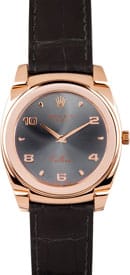
Cellini:  Named for the 16th century Italian goldsmith Benvenuto Cellini who provided his services to popes and kings, this fine collection of Rolex watches comes in a variety of designs and styles. Each is encased in 18K yellow gold with either quartz or manual wind movement, white or mother of pearl dial, either Arabic or Roman numerals and 18K gold bracelet or leather strap.


Date:  Similar to the Air-King the Rolex Date debuted in the 1950s and included a date function and employed 34mm diameter faces. Today’s Date watches are available in steel only and feature an innovative design with automatic chronometer movement and a waterproof case safe up to 1000 meters. The original model line of Date watches were available in steel, 18 carat yellow and steel and 18 carat yellow gold all with fluted bezels and diamond markers making them sought after by Rolex collectors and investors. Favored models include the 1501, 15200 and the 15053.


Datejust:  This Rolex model was first offered in 1945 and remains the best-selling Rolex watch today most likely for the many available variations. The following "Rolex Datejust models", are listing below and some are considered to be "old Rolex models" numbers.   Along with the many different steel cases and bracelet selections, the DateJust is available in steel and yellow gold, steel and rose gold and solid gold. DateJust enthusiasts can choose from a variety of dials and diamond bezel choices. First designed with a Jubilee bracelet, today’s DateJust Rolex watches come with Oyster bands. Rare DateJust models include those with smooth bezels—most are fluted. Because of the many designs available, the DateJust is the go-to Rolex for everything from golf to the office. Additional features of the DateJust include auto winding technology Cyclops date, waterproof case and ultra-smooth 31 jewel movement. Dials sizes range from 26mm to 41mm.  Popular models include the 116138, 116200 and the 116234.


Datejust Mid-Size:  This popular line is similar to the Datejust, except that the case is 31mm, instead of 36mm. It also is distinguished by its handsomely designed dial with Roman numerals and gold time markers, and it comes in 18K gold and stainless steel or stainless steel. Other features include self-winding technology, date window, 29-jewel movement and fluted bezel. This Datejust Mid-Size can be a men's or women's watch.


Datejust OysterQuartz:  For a quarter-century, Rolex produced the Oysterquartz in Datejust, models 17000 (stainless steel) 17013 (steel/Yellow Gold) and 17104 (steel/White Gold). Special models of the Oysterquartz were made with jeweled dials, bezels and bracelets. Fewer than 25,000 Oysterquartz watches are believed to have been made. The last time one appeared in a Rolex catalog was 2001. It also is the last year that Rolex received chronometer certificates for the quartz movement from the COSC. The steel gold and all gold models continued to appear in the Rolex catalog until 2003, when the last of the models in stock shipped.

 
Datejust Turn-O-Graph (Thunderbird):  Launched in 1953, the Turn-O-Graph was designed for adventure lovers. It was discontinued in the early 1960s, then reborn as a special version of the Datejust. The modern Turn-O-Graph features a bi-directional bezel to measure elapsed time, making it the most functional and expensive watch in the Datejust line. Prior to the introduction of the Day-Date President, it was the most expensive Rolex cataloged.


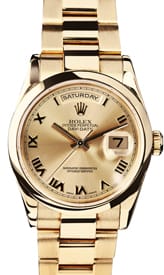
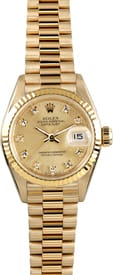
Day-Date President:  The Rolex Day-Date was nicknamed the “President” after the company presented one to then-president Dwight D. Eisenhower in the 1950s. It features a calendar mechanism that displays the date and day using the self-winding Oyster movement.  It comes in Day-Date I (36mm case) and Day-Date II (42mm case) models.


Day-Date Oysterquartz:  Similar to the Datejust Oyster quartz, the Day Date Oyster quartz was launched by Rolex in 1977 in two different model variations. One model was the 19018 which came in yellow gold and the other model was the 19019 which came in white gold. Both models featured fluted bezels, sapphire crystals, and integral bracelets. The last year these watches were produced by Rolex was in 2001, again the same as when the Datejust Oyster quartz was discontinued.  These watches were in production for only 24 years and are now discontinued making them even that much more rare now!


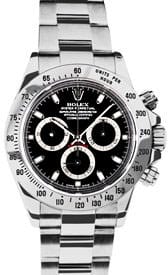
Daytona (Cosmograph):  From the 1960s to the 1980s, Rolex produced the Daytona / Cosmograph in two variations, however, the demand for the first (a Valjoux workhorse) brought forth the second, which came with a Zenith modified movement. Named for the famous race and speedway, perhaps the turning point for its popularity came when actor Paul Newman was seen wearing his Daytona Rolex at racing events. This model is available in stainless steel, 18 carat gold and stainless steel and 18 carat solid gold. By 2000, Rolex released a Daytona with a caliber 4130 which came with a 72 hour power reserve (model 116520). Surprisingly, the two-tone and gold variations are not the big sellers in the Daytona line up so for function and fashion with a little Newman thrown in, go for the stainless steel.


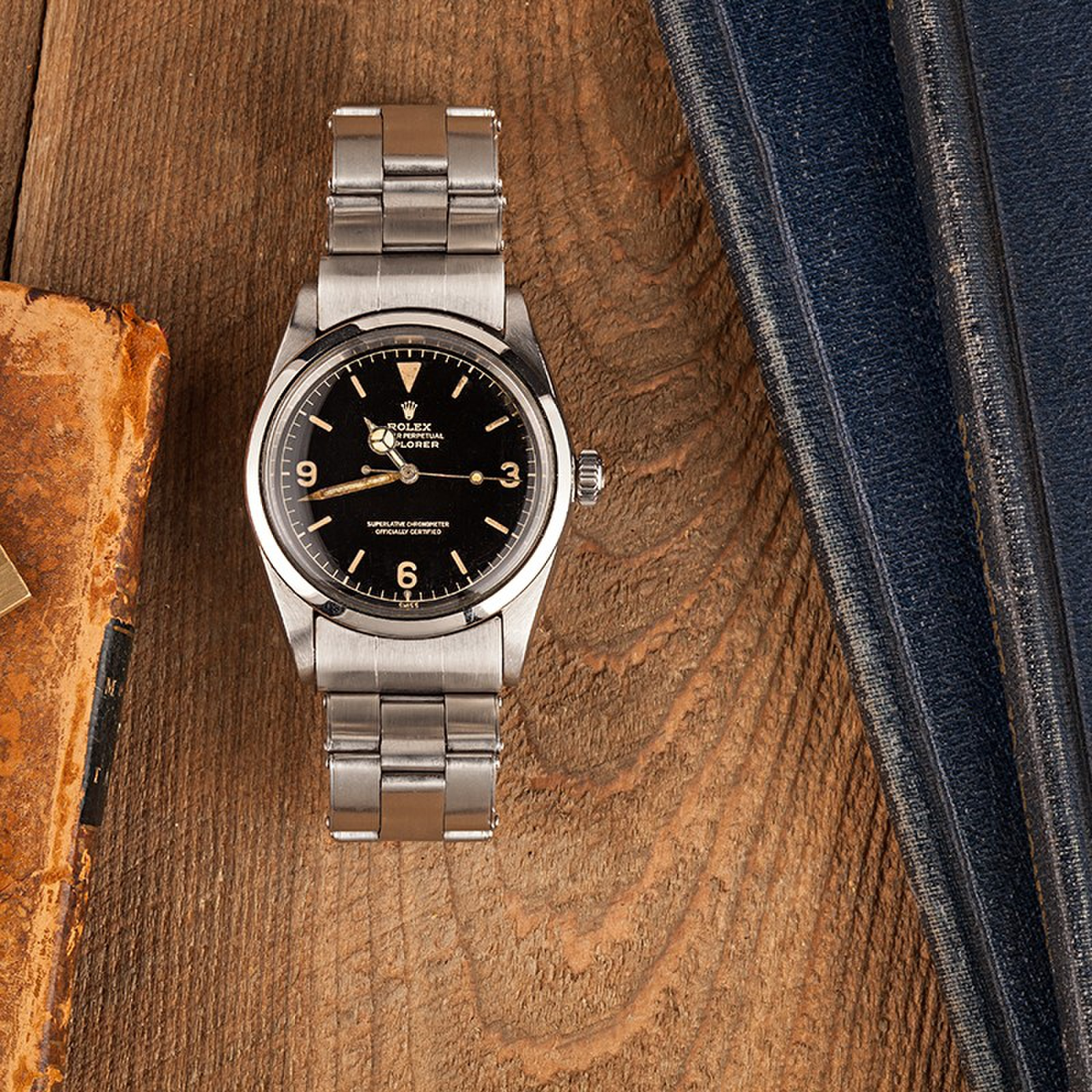
Explorer:  Rolex first introduced the Explorer in 1954 and this model has remained steady in its features including a black dial with Arabic numbers, no date function and a smooth bezel. The 36mm stainless steel case in model 14270 was updated in in 2010 to the 39mm 214270 model. The idea behind the Explorer was its ability to withstand temperatures between -20C and +40C and historians tout the Explorer was made in honor of Edmund Hilary and Tenzing Norgay—the first men to reach the summit of Mt. Everest. Original models (6350 and 6150) came with bubble back 10.5 movement and a certified chronometer. With the 14270 model, the Explorer featured a new case, dial, movement and glass and finally a sapphire crystal glass. Because of the wide variations in design, collectors now seek out modern-day models such as the 214270 which come with a waterproof case, 24-hour rotating bezel, luminous 24-hour markers, and a black and sapphire dial.


Explorer II:  Much like the Explorer, the Rolex Explorer II had exploration in mind. It was equipped with a fourth hand that rotated once every 24 hours and designed for speleologists (cave explorers) who often had trouble differentiating between the morning and afternoon or day and night. Although the Explorer II was released in the 1970s, it didn’t become popular until the early 1990s.  Early models, the 1655 and the 1019 were the only two watches that utilized hands not used by any other Rolex model. By the early 1990s, the 1655 model came with sapphire glass and also allowed the owner to set the hour hand backwards or forward in one hour jumps. The 16570 models are the most popular today and feature 31 jewel movement; auto wind technology, Rolex Quickset, scratch resistance sapphire crystal, a waterproof stainless steel case and black dial with luminous time markers. Because of the many model changes and although the idea of durability of the Explorer II has never changed, model prices vary based on the release date, degree of rarity and feature set.


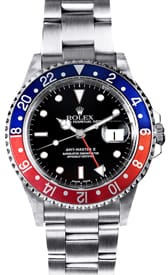
GMT-Master:  From the 1950s to the 1970s, Rolex and their GMT-Master and GMT Master II timepieces were something to be seen and owned. The GMT-Master boasted a variety of dial colors and bracelet types making it the Rolex for the fashion and function. Great in depths up to 30 meters, the GMT-Masters model line also featured 31 jewel movement, waterproof case and Rolex Quickset. These watches were popular based on their ability to use a second hour hand to indicate a second time zone in the original model and by the 1970s, the GMT-Master II allowed for easy adjustment of a second hour hand with the crown in position two. There are all-black dial steel models and other models come with black, red/black or red/blue dials—the most popular bracelet is the Jubilee for all GMT-Master Rolex watches. Hot today is the GMT-Master II model 116710 with a maxi-case, 3186 caliber movement and ceramic bezel. Because GMT-Master Rolex watches increase in value, they are very collectible.


Ladies Date:  Introduced in the late 1970s, the GMT-Master II like its predecessor 20 years earlier, utilizes a second hour hand to indicate a second time zone. It comes with a simple rotating 24-hour bezel so it is easy to tell the time in any time zone. It also allows the user to easily adjust the second hour hand with the crown in position 2. The steel models are only offered with black dials. The bezels are available in black, red/black and red/blue. GMTIIs typically come with a Jubilee bracelet.


Ladies Datejust:  The Lady-Datejust offers opulent choices of bracelet bands and bezels of yellow gold, white gold, platinum or dazzling dual tone. Each watch includes a 32-jewel precision (real diamonds, rubies, emeralds and sapphires) movement and faces bedazzled in a constellation of genuine diamonds. Each piece is painstakingly crafted with the best of materials for a watch that will last for years to come. The automatic movement keeps accurate time, date and second hand movement. The buyer also has different choices in face color (such as sapphire blue and salmon) and number font.


Ladies Oyster Perpetual:  The Rolex Oyster Perpetual Datejust Ladies Watch features an automatic Swiss movement. The dial features date magnified at three o'clock position. The 18K Yellow Gold Case is attached on an 18K Yellow Gold bracelet which securely locks with a fold over hidden closure and Rolex logo. It has a 26mm case and automatic movement.


Masterpiece:  Rolex Masterpiece watches come in different colors but the standard colors are blue, white and silver. The most important feature of the Rolex Masterpiece watches is its dial styles that are Index, Roman or Arabic. The Rolex Masterpiece watch also boasts automatic winding movements. Generally, these watches are made up of stainless steel and gold or polished with diamond, mother of pearl, ruby and precious gems.


Milgauss:  Scientific accuracy was the ideology behind the Milgauss Rolex watch. This scientific need most likely came from its release in 1956 to scientists working near high levels of magnetic energy which made their watches lose precision. The Milgauss 116400 features a waterproof 40mm stainless steel case with a smooth bezel and black dial and stunning white and orange luminous hour markers.  In 2008 Rolex released a Milgauss Green Crystal anniversary edition, the 116400 GV which can withstand magnetic fields up to 1,000 gauss.  While variations over the years vary little, the Milgauss remains supreme and a favorite of those in the science field or the up and coming for its function and durability.


Oyster Perpetual:  Similar to the Air-King 34mm model, the Oyster Perpetual (No Date) perplexed many as all Rolex timepieces are also Oyster Perpetual. The energy and popularity behind this model comes from the varied dial options, however, today’s Oyster Perpetual (No Date) Rolex watches are available in steel or steel with a white gold bezel.  Popular sizes range from the 26mm ladies to the 34mm—there is also a 31mm mid-size version of the Oyster Perpetual.

Rolex Model Numbers

Air King:  The Air-King is considered by many to be the most affordable member of the Rolex family of watches and is known for its simplicity and balanced styling. The current models come standard with an Oyster bracelet, no date, and are 34mm in diameter.  The reference model #114200 sells retail at about $5,000 while the #114234 has a white gold bezel and has a retail price of about $6,200.  Some folks like searching Rolex models by year, or "new Rolex model numbers", or even "Rolex Submariner models".  Specifically designed for British Royal Air Force (RAF) pilots in the 1930s, the Air-King’s simplicity and large watch faces (32 to 34mm in diameter) were not ordinary in watch design for the time—but Rolex founder Hans Wilsdorf felt large dials were essential for night flying. Given names like the Air Tiger,  Air Lion and Air Giant, only the Air-King model remains today, however, many seek out the older models based on their airmen history. Original Air-King models were hand-wound and built with the classic 10.5 ligne hunter movement until they were upgraded to the more popular Oyster Perpetual (automatic) movement. We do not provide "Rolex models by year". Available in both gold and steel combinations, the Air-King is known in Rolex fan forums as “the watch rich in history” or the “Warrior Watch.” Rolex Air-Kings place in the entry-level category of Rolex watches as far as price, yet these models are still stunning with chronographs, 31 jewel movements and scratch resistant sapphire crystals. Simplicity and durability make the Air-King popular and functional and the waterproof cases endure in water and outdoor sporting. The most popular and sought after models include the 114200, 14010 and the 5500. To view more current Rolex models, visit www.rolex.com.


Cellini:  Named for the 16th century Italian goldsmith Benvenuto Cellini who provided his services to popes and kings, this fine collection of Rolex watches comes in a variety of designs and styles. Each is encased in 18K yellow gold with either quartz or manual wind movement, white or mother of pearl dial, either Arabic or Roman numerals and 18K gold bracelet or leather strap.


Date:  Similar to the Air-King the Rolex Date debuted in the 1950s and included a date function and employed 34mm diameter faces. Today’s Date watches are available in steel only and feature an innovative design with automatic chronometer movement and a waterproof case safe up to 1000 meters. The original model line of Date watches were available in steel, 18 carat yellow and steel and 18 carat yellow gold all with fluted bezels and diamond markers making them sought after by Rolex collectors and investors. Favored models include the 1501, 15200 and the 15053.


Datejust:  This Rolex model was first offered in 1945 and remains the best-selling Rolex watch today most likely for the many available variations. The following "Rolex Datejust models", are listing below and some are considered to be "old Rolex models" numbers.   Along with the many different steel cases and bracelet selections, the DateJust is available in steel and yellow gold, steel and rose gold and solid gold. DateJust enthusiasts can choose from a variety of dials and diamond bezel choices. First designed with a Jubilee bracelet, today’s DateJust Rolex watches come with Oyster bands. Rare DateJust models include those with smooth bezels—most are fluted. Because of the many designs available, the DateJust is the go-to Rolex for everything from golf to the office. Additional features of the DateJust include auto winding technology Cyclops date, waterproof case and ultra-smooth 31 jewel movement. Dials sizes range from 26mm to 41mm.  Popular models include the 116138, 116200 and the 116234.


Datejust Mid-Size:  This popular line is similar to the Datejust, except that the case is 31mm, instead of 36mm. It also is distinguished by its handsomely designed dial with Roman numerals and gold time markers, and it comes in 18K gold and stainless steel or stainless steel. Other features include self-winding technology, date window, 29-jewel movement and fluted bezel. This Datejust Mid-Size can be a men's or women's watch.


Datejust OysterQuartz:  For a quarter-century, Rolex produced the Oysterquartz in Datejust, models 17000 (stainless steel) 17013 (steel/Yellow Gold) and 17104 (steel/White Gold). Special models of the Oysterquartz were made with jeweled dials, bezels and bracelets. Fewer than 25,000 Oysterquartz watches are believed to have been made. The last time one appeared in a Rolex catalog was 2001. It also is the last year that Rolex received chronometer certificates for the quartz movement from the COSC. The steel gold and all gold models continued to appear in the Rolex catalog until 2003, when the last of the models in stock shipped.

 
Datejust Turn-O-Graph (Thunderbird):  Launched in 1953, the Turn-O-Graph was designed for adventure lovers. It was discontinued in the early 1960s, then reborn as a special version of the Datejust. The modern Turn-O-Graph features a bi-directional bezel to measure elapsed time, making it the most functional and expensive watch in the Datejust line. Prior to the introduction of the Day-Date President, it was the most expensive Rolex cataloged.


Day-Date President:  The Rolex Day-Date was nicknamed the “President” after the company presented one to then-president Dwight D. Eisenhower in the 1950s. It features a calendar mechanism that displays the date and day using the self-winding Oyster movement.  It comes in Day-Date I (36mm case) and Day-Date II (42mm case) models.


Day-Date Oysterquartz:  Similar to the Datejust Oyster quartz, the Day Date Oyster quartz was launched by Rolex in 1977 in two different model variations. One model was the 19018 which came in yellow gold and the other model was the 19019 which came in white gold. Both models featured fluted bezels, sapphire crystals, and integral bracelets. The last year these watches were produced by Rolex was in 2001, again the same as when the Datejust Oyster quartz was discontinued.  These watches were in production for only 24 years and are now discontinued making them even that much more rare now!


Daytona (Cosmograph):  From the 1960s to the 1980s, Rolex produced the Daytona / Cosmograph in two variations, however, the demand for the first (a Valjoux workhorse) brought forth the second, which came with a Zenith modified movement. Named for the famous race and speedway, perhaps the turning point for its popularity came when actor Paul Newman was seen wearing his Daytona Rolex at racing events. This model is available in stainless steel, 18 carat gold and stainless steel and 18 carat solid gold. By 2000, Rolex released a Daytona with a caliber 4130 which came with a 72 hour power reserve (model 116520). Surprisingly, the two-tone and gold variations are not the big sellers in the Daytona line up so for function and fashion with a little Newman thrown in, go for the stainless steel.


Explorer:  Rolex first introduced the Explorer in 1954 and this model has remained steady in its features including a black dial with Arabic numbers, no date function and a smooth bezel. The 36mm stainless steel case in model 14270 was updated in in 2010 to the 39mm 214270 model. The idea behind the Explorer was its ability to withstand temperatures between -20C and +40C and historians tout the Explorer was made in honor of Edmund Hilary and Tenzing Norgay—the first men to reach the summit of Mt. Everest. Original models (6350 and 6150) came with bubble back 10.5 movement and a certified chronometer. With the 14270 model, the Explorer featured a new case, dial, movement and glass and finally a sapphire crystal glass. Because of the wide variations in design, collectors now seek out modern-day models such as the 214270 which come with a waterproof case, 24-hour rotating bezel, luminous 24-hour markers, and a black and sapphire dial.


Explorer II:  Much like the Explorer, the Rolex Explorer II had exploration in mind. It was equipped with a fourth hand that rotated once every 24 hours and designed for speleologists (cave explorers) who often had trouble differentiating between the morning and afternoon or day and night. Although the Explorer II was released in the 1970s, it didn’t become popular until the early 1990s.  Early models, the 1655 and the 1019 were the only two watches that utilized hands not used by any other Rolex model. By the early 1990s, the 1655 model came with sapphire glass and also allowed the owner to set the hour hand backwards or forward in one hour jumps. The 16570 models are the most popular today and feature 31 jewel movement; auto wind technology, Rolex Quickset, scratch resistance sapphire crystal, a waterproof stainless steel case and black dial with luminous time markers. Because of the many model changes and although the idea of durability of the Explorer II has never changed, model prices vary based on the release date, degree of rarity and feature set.


GMT-Master:  From the 1950s to the 1970s, Rolex and their GMT-Master and GMT Master II timepieces were something to be seen and owned. The GMT-Master boasted a variety of dial colors and bracelet types making it the Rolex for the fashion and function. Great in depths up to 30 meters, the GMT-Masters model line also featured 31 jewel movement, waterproof case and Rolex Quickset. These watches were popular based on their ability to use a second hour hand to indicate a second time zone in the original model and by the 1970s, the GMT-Master II allowed for easy adjustment of a second hour hand with the crown in position two. There are all-black dial steel models and other models come with black, red/black or red/blue dials—the most popular bracelet is the Jubilee for all GMT-Master Rolex watches. Hot today is the GMT-Master II model 116710 with a maxi-case, 3186 caliber movement and ceramic bezel. Because GMT-Master Rolex watches increase in value, they are very collectible.


Ladies Date:  Introduced in the late 1970s, the GMT-Master II like its predecessor 20 years earlier, utilizes a second hour hand to indicate a second time zone. It comes with a simple rotating 24-hour bezel so it is easy to tell the time in any time zone. It also allows the user to easily adjust the second hour hand with the crown in position 2. The steel models are only offered with black dials. The bezels are available in black, red/black and red/blue. GMTIIs typically come with a Jubilee bracelet.


Ladies Datejust:  The Lady-Datejust offers opulent choices of bracelet bands and bezels of yellow gold, white gold, platinum or dazzling dual tone. Each watch includes a 32-jewel precision (real diamonds, rubies, emeralds and sapphires) movement and faces bedazzled in a constellation of genuine diamonds. Each piece is painstakingly crafted with the best of materials for a watch that will last for years to come. The automatic movement keeps accurate time, date and second hand movement. The buyer also has different choices in face color (such as sapphire blue and salmon) and number font.


Ladies Oyster Perpetual:  The Rolex Oyster Perpetual Datejust Ladies Watch features an automatic Swiss movement. The dial features date magnified at three o'clock position. The 18K Yellow Gold Case is attached on an 18K Yellow Gold bracelet which securely locks with a fold over hidden closure and Rolex logo. It has a 26mm case and automatic movement.


Masterpiece:  Rolex Masterpiece watches come in different colors but the standard colors are blue, white and silver. The most important feature of the Rolex Masterpiece watches is its dial styles that are Index, Roman or Arabic. The Rolex Masterpiece watch also boasts automatic winding movements. Generally, these watches are made up of stainless steel and gold or polished with diamond, mother of pearl, ruby and precious gems.


Milgauss:  Scientific accuracy was the ideology behind the Milgauss Rolex watch. This scientific need most likely came from its release in 1956 to scientists working near high levels of magnetic energy which made their watches lose precision. The Milgauss 116400 features a waterproof 40mm stainless steel case with a smooth bezel and black dial and stunning white and orange luminous hour markers.  In 2008 Rolex released a Milgauss Green Crystal anniversary edition, the 116400 GV which can withstand magnetic fields up to 1,000 gauss.  While variations over the years vary little, the Milgauss remains supreme and a favorite of those in the science field or the up and coming for its function and durability.


Oyster Perpetual:  Similar to the Air-King 34mm model, the Oyster Perpetual (No Date) perplexed many as all Rolex timepieces are also Oyster Perpetual. The energy and popularity behind this model comes from the varied dial options, however, today’s Oyster Perpetual (No Date) Rolex watches are available in steel or steel with a white gold bezel.  Popular sizes range from the 26mm ladies to the 34mm—there is also a 31mm mid-size version of the Oyster Perpetual.


Sea-Dweller:  For deep sea divers, the Sea Dweller Rolex watch was introduced in 1978 and sadly, discontinued in 2008. Part of the reason to discontinue this Rolex model was perhaps its similarity to the Submariner except the steel case was heavier and it came with a durable crystal with no Cyclops eye. A helium escape valve was only useful for deep sea divers and Rolex actually named one model, the Rolex Submariner 2000 Sea Dweller, but later dropped the Submariner 2000 from its name in 1973. The 16660 Sea Dwellers remain a diver favorite and include auto winding technology, 31 jewel movement, rugged stainless steel case and of course the desired helium escape valve. The face is oversized for easy viewing in underwater conditions and its stainless steel Oyster bracelet with secure flip-lock clasp makes it possible for this Rolex watch to withstand depths of 4000 feet or 1220 meters. The discontinuation of the Sea Dweller makes it quite collectible and rare.


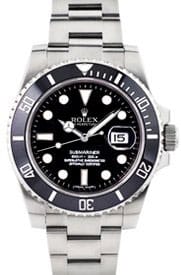
Submariner:  Production began on the Rolex Submariner in 1954 and this model is only available with an Oyster bracelet with a 40mm case. Perhaps the most recognizable Rolex today based on its black dial, over the years Rolex has released many anniversary editions—some even with green bezels. The single direction rotating diving bezel is part of its essences and many consider the Submariner to be the “James Bond” Rolex watch. The late 1970s and late 1980s models offered the Rolex Quickset function and sapphire crystals in models 16800 and 16610, respectively. By 2010, model 116610 came with a ceramic bezel and locking buckle. Variations of the Submariner include the steel (no date), steel (with date) and yellow and white gold. An 18 carat gold and steel model is also available and if diamonds delight you, they are only available in the gold models. The Submariner may forever be known as the “ever-changing” Rolex watch with the vast array of available models.


Submariner Date:  Launched in 1953, the Submariner was the first Rolex guaranteed waterproof to a depth of 200 meters (660 feet). The Oyster Perpetual kept time for the likes of Sir Edmund Hillary and Tenzing Norgay on their successful quest to the top of Mount Everest that same year. Since then, these watches have become known as the watches of achievers. The Submariner comes only on an Oyster bracelet and has a 40mm case. The steel model is only available with a black dial, and is one of the most recognizable Rolexes. Anniversary editions with green bezels can occasionally be found. The Submariner has the common single direction rotating diving bezel with minute markers for the first 15 minutes. The original models—those made until 1956—are often considered "James Bond" models and have some easily recognizable differences. Notably, they have a smaller crown, no crown guard, and the bezel only had minute markers every five minutes. In 1982, the model 16800 was introduced. It sported the new sapphire crystal and quickset function. In 1989, the 16610 was introduced with an improved movement and a more secure bezel.  The 116610 was introduced in 2010 with a ceramic (Cerachrom) bezel and improved Glidelock buckle. The Submariner is one the most popular models and comes in a variety of styles.


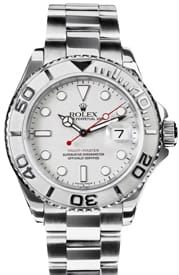
Yacht-Master:  In 1992, Rolex released the Yacht-Master in both men and women’s styles and popular models include the 16622, 168622, 16623 and the 68623. Dials are available in full or mid-size and the Yacht-Master is available in stainless steel and gold and perhaps the most desired—platinum!  The first model used the caliber 3135 movement much like the Submariner and Sea-Dweller and Rolex Yacht-Master watches are fitted with a triplock crown. Not made for watersports (resistant only to 100 meters), these watches shout flair and fashion. The 40mm version is often referred to as the Jumbo Yacht-Master. A favorite among celebrities, the Yacht-Master, a relatively new watch to the Rolex line up continues to grow up and get noticed.


Sea-Dweller:  For deep sea divers, the Sea Dweller Rolex watch was introduced in 1978 and sadly, discontinued in 2008. Part of the reason to discontinue this Rolex model was perhaps its similarity to the Submariner except the steel case was heavier and it came with a durable crystal with no Cyclops eye. A helium escape valve was only useful for deep sea divers and Rolex actually named one model, the Rolex Submariner 2000 Sea Dweller, but later dropped the Submariner 2000 from its name in 1973. The 16660 Sea Dwellers remain a diver favorite and include auto winding technology, 31 jewel movement, rugged stainless steel case and of course the desired helium escape valve. The face is oversized for easy viewing in underwater conditions and its stainless steel Oyster bracelet with secure flip-lock clasp makes it possible for this Rolex watch to withstand depths of 4000 feet or 1220 meters. The discontinuation of the Sea Dweller makes it quite collectible and rare.
 
Submariner:  Production began on the Rolex Submariner in 1954 and this model is only available with an Oyster bracelet with a 40mm case. Perhaps the most recognizable Rolex today based on its black dial, over the years Rolex has released many anniversary editions—some even with green bezels. The single direction rotating diving bezel is part of its essences and many consider the Submariner to be the “James Bond” Rolex watch. The late 1970s and late 1980s models offered the Rolex Quickset function and sapphire crystals in models 16800 and 16610, respectively. By 2010, model 116610 came with a ceramic bezel and locking buckle. Variations of the Submariner include the steel (no date), steel (with date) and yellow and white gold. An 18 carat gold and steel model is also available and if diamonds delight you, they are only available in the gold models. The Submariner may forever be known as the “ever-changing” Rolex watch with the vast array of available models.


Submariner Date:  Launched in 1953, the Submariner was the first Rolex guaranteed waterproof to a depth of 200 meters (660 feet). The Oyster Perpetual kept time for the likes of Sir Edmund Hillary and Tenzing Norgay on their successful quest to the top of Mount Everest that same year. Since then, these watches have become known as the watches of achievers. The Submariner comes only on an Oyster bracelet and has a 40mm case. The steel model is only available with a black dial, and is one of the most recognizable Rolexes. Anniversary editions with green bezels can occasionally be found. The Submariner has the common single direction rotating diving bezel with minute markers for the first 15 minutes. The original models—those made until 1956—are often considered "James Bond" models and have some easily recognizable differences. Notably, they have a smaller crown, no crown guard, and the bezel only had minute markers every five minutes. In 1982, the model 16800 was introduced. It sported the new sapphire crystal and quickset function. In 1989, the 16610 was introduced with an improved movement and a more secure bezel.  The 116610 was introduced in 2010 with a ceramic (Cerachrom) bezel and improved Glide lock buckle. The Submariner is one the most popular models and comes in a variety of styles.


Yacht-Master:  In 1992, Rolex released the Yacht-Master in both men and women’s styles and popular models include the 16622, 168622, 16623 and the 68623. Dials are available in full or mid-size and the Yacht-Master is available in stainless steel and gold and perhaps the most desired—platinum!  The first model used the caliber 3135 movement much like the Submariner and Sea-Dweller and Rolex Yacht-Master watches are fitted with a triplock crown. Not made for watersports (resistant only to 100 meters), these watches shout flair and fashion. The 40mm version is often referred to as the Jumbo Yacht-Master. A favorite among celebrities, the Yacht-Master, a relatively new watch to the Rolex line up continues to grow up and get noticed.
now you have an idea of Rolexes and types I do hope you comeback for  more.